

When I signed up for a health insurance product that promoted itself with the phrase, “for Life,” I felt pretty good about that name. At my age, “for life” sounded like a manageable commitment. Sort of like buying a semi-green banana. I’m not looking for decades. Just “for life.”
As it turns out, my health insurance policy had a shorter life expectancy than I did.
Our Medicare Advantage plan in Cambria County will no longer be offered after this year. While I’m still alive and living in the same house, my coverage has decided to relocate.
Six miles down the road into Somerset County, the plan still exists. I guess the risk of aging changes dramatically at the county line. Maybe Medicare Advantage patients in Somerset eat fewer gobs.
Look, I understand business decisions. I’ve spent over 35 years making them. Margins matter. Regulations multiply faster than rabbits. Consultants to the Mercy nuns used to say, “No money. No mission.”
But understanding a decision and appreciating it are entirely different things.
I understand colonoscopies, too.
For the corporate boardroom, discontinuing a plan may be a square on a spreadsheet, a strategic realignment. For the rest of us, it’s a giant pain.
Suddenly you’re figuring out which doctors are in network, which hospitals accept which plans, and whether your monthly payment savings disappear when you buy an exotic cholesterol drug.
The industry has become remarkably good at marketing concern. Every commercial features smiling seniors hiking mountains or fishing crystal-clear streams. Apparently everyone on Medicare spends their free time biking, hiking, and eating yogurt.
Meanwhile, as patients, we spend hours on hold listening to music that makes my teeth hurt.
My Medicare Advantage consultant, Andrew, eventually convinced me to settle on another PPO plan. I did not celebrate this decision with wild abandon.
The company he recommended had clinics, pharmacies, and a pharmacy benefit manager all under one parent umbrella corporation. Except for owning funeral homes, they have us covered from the cradle to the almost grave.
As a patient, I wonder how much of that efficiency helps their stock options and how much improves my healthcare experience.
That’s a question, not an accusation.
These companies didn’t invent this problem. Hospitals, insurers, pharmaceutical companies, employers, and government programs are all dancing on the same griddle. Nobody can give you unlimited healthcare with make-believe money. I’ve sat through enough budget meetings to know that. I hope their profits aren’t higher than they should be. After all, we patients are the ones who experience collateral damage from their decisions.
A cardiologist who has managed your heart condition for twenty years isn’t just a name in a directory. Neither is the pharmacist who knows you when you call. Skilled care comes from relationships, and those relationships are best when they’re local and familiar.
Think of Cheers, where everybody knew your name, but in healthcare, that means more than just getting another beer.
We’re worried about keeping our physicians, affording medications, and understanding a bill.
My dad worked for Blue Cross when insurance felt less like a product and more like a promise. Was that system perfect? Absolutely not. Neither was Dad’s Plymouth Satellite. But at least we understood where we were going, and who was driving.
Today, after three-plus decades in healthcare, I’m deciphering benefit summaries like ancient manuscripts. I understand the economics. I only wish the economists did a better job of understanding us.
If continuity of care matters as much as the brochures say, preserving those relationships should matter, too. Patients deserve to feel that somebody remembers that.
We shouldn’t need a consultant and technologically gifted grandchildren to figure out where we can get sick next January.
“For Life” was a catchy phrase.
I just missed the part explaining that “for life” came with an end date.
Fortunately, mine hasn’t.
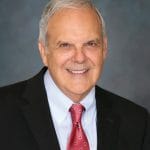
F. Nicholas (Nick) Jacobs, FACHE is a member of the executive committee of the Board of Regents for Southern California University of the Health Sciences. He has served as an officer of the American Board of Integrative Holistic Medicine, was a founding officer of the Academy of Integrative Health and Medicine, and served on the boards of Planetree International and the Integrative Health Policy Consortium.
Mr. Jacobs has consulted for Integrative Medical Centers at the Atlantic Health System, Hackensack University Medical Center, Parkview Health System, Cedars Sinai, the Block Center for Integrative Cancer Care, and Highlands Hospital in Pennsylvania.
He has served as President of Windber Medical Center and in senior leadership roles for Mercy Medical Center and the Conemaugh Health System. He was President and co-founder of the Windber Research Institute, a genetic research institute and bio-repository. He also founded the Clinical and Translational Genome Research Institute, a Pharmacogenomics research institute now affiliated with Southern California University.
Nick is a consultant for the United States Department of Defense Clinical Breast Care Project and was responsible for creating the Conemaugh Health Foundation, Mercy Healthcare Foundation, and the Laurel Highlands Educational Foundation.
He holds Masters Degrees in Education from the Indiana University of Pennsylvania and in Public Management-Health Systems Management from Carnegie Mellon University, has completed a certification in Health Systems Management from Harvard University, and is a fellow of the American College of Healthcare Executives. He has written two books and is a regular contributor to several publications.
Finally, Nick has spoken at conferences for the Highmark, Cigna, the American Hospital Association, American College of Healthcare Executives, National Cancer Institute, Academy of Integrative Health and Medicine, World Health Organization, World Congress on Cardiology, and the Association of Healthcare Philanthropy
A former professional trumpet player and teacher, Nick is the father of two children, has six grandchildren, and lives in Windber and Pittsburgh, PA.


