
I spent nearly four decades in healthcare leadership. During those years, I recruited physicians of every imaginable specialty: Cardiologists. Neurosurgeons. Orthopedic surgeons. Oncologists. Gynecologists. Family physicians. Urologists. You name it, I probably recruited one.
I attended medical staff meetings, strategic planning retreats, physician recruiting dinners, and more healthcare conferences than any human being should have to endure.
So imagine my surprise when, at age 79, I was referred to a specialist I had never heard of: a Mohs surgeon. My first reaction was simple. “Was I in a coma for the last 40 years?”
Apparently not.
What I discovered was even more surprising. This specialty has been around for decades. Meanwhile, many of my friends in Florida and California knew exactly what a Mohs surgeon was. Of course they did.
They had spent years living under a sun that seems to shine every day of the year. Those of us in Pennsylvania somehow managed to collect just as much sun exposure while convincing ourselves we were protected. In PA we buy more sunglasses than anywhere except Seattle, Washington because we forget where we left them.
The truth is when I was a kid, nobody carried sunscreen. We spent entire summers outdoors. We played baseball, cut grass, rode bicycles, fished, golfed, gardened, and attended sporting events from spring through fall.
Looking back, our skin care strategy had three ingredients: sunshine, and baby oil occasionally mixed with Merthiolate. It was less of a healthcare plan and more like Colonel Sanders’ secret fried chicken recipe. Tans were healthy. The darker the better.
Today we know that years of exposure to ultraviolet radiation can significantly increase the risk of developing skin cancer. In fact, skin cancer is one of the most common forms of cancer in America, especially among older adults who spent our lives working and playing outdoors.
That is where Mohs surgery enters the picture.
Named after Dr. Frederic Mohs, the physician who developed the technique, Mohs surgery is a highly specialized procedure used to treat certain types of skin cancer. What makes it different is its precision.
The surgeon removes a thin layer of tissue and immediately examines it under a microscope. If cancer cells remain, another thin layer is removed and examined. The process continues until no cancer cells are detected.
The goal is simple: remove all of the cancer while preserving as much healthy tissue as possible. That is particularly important when cancers appear on the nose, ears, eyelids, scalp, cheeks, or other visible areas where preserving normal tissue can make a big difference.
The procedure is known for very high cure rates and excellent cosmetic outcomes. In many cases, it allows physicians to remove the cancer while minimizing unnecessary tissue loss.
So, why don’t more people know about this? Ask a group of retirees what a cardiologist does and everyone knows. Ask about an orthopedic surgeon, and you’ll get plenty of answers, plus a few joint replacement stories.
But ask about a Mohs surgeon and many of us just tilt our heads like a confused puppy.
Perhaps that’s because we don’t think much about skin cancer until a suspicious spot appears on our face, neck, scalp, or arm.
The lesson for Baby Boomers is straightforward. Pay attention to your skin. If you notice a spot that won’t heal, a growth that changes appearance, or a lesion that simply doesn’t seem right, have it checked.
We carefully monitor our blood pressure, cholesterol, blood sugar, and heart health. We should give the same attention to the largest organ in the human body. After all, our skin has protected us through every season of our lives.
And if, like me, you suddenly find yourself sitting in a Mohs surgeon’s office wondering how you managed to miss an entire medical specialty for 40 years, you’re probably not alone.
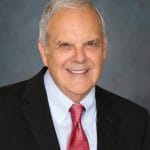
F. Nicholas (Nick) Jacobs, FACHE is a member of the executive committee of the Board of Regents for Southern California University of the Health Sciences. He has served as an officer of the American Board of Integrative Holistic Medicine, was a founding officer of the Academy of Integrative Health and Medicine, and served on the boards of Planetree International and the Integrative Health Policy Consortium.
Mr. Jacobs has consulted for Integrative Medical Centers at the Atlantic Health System, Hackensack University Medical Center, Parkview Health System, Cedars Sinai, the Block Center for Integrative Cancer Care, and Highlands Hospital in Pennsylvania.
He has served as President of Windber Medical Center and in senior leadership roles for Mercy Medical Center and the Conemaugh Health System. He was President and co-founder of the Windber Research Institute, a genetic research institute and bio-repository. He also founded the Clinical and Translational Genome Research Institute, a Pharmacogenomics research institute now affiliated with Southern California University.
Nick is a consultant for the United States Department of Defense Clinical Breast Care Project and was responsible for creating the Conemaugh Health Foundation, Mercy Healthcare Foundation, and the Laurel Highlands Educational Foundation.
He holds Masters Degrees in Education from the Indiana University of Pennsylvania and in Public Management-Health Systems Management from Carnegie Mellon University, has completed a certification in Health Systems Management from Harvard University, and is a fellow of the American College of Healthcare Executives. He has written two books and is a regular contributor to several publications.
Finally, Nick has spoken at conferences for the Highmark, Cigna, the American Hospital Association, American College of Healthcare Executives, National Cancer Institute, Academy of Integrative Health and Medicine, World Health Organization, World Congress on Cardiology, and the Association of Healthcare Philanthropy
A former professional trumpet player and teacher, Nick is the father of two children, has six grandchildren, and lives in Windber and Pittsburgh, PA.


