

For the past two decades, I’ve been looking for the future of health care in the United States. I looked for it in technology. I looked for it in genomics and helped start two genomic research institutes. But I began to see what the true future of health care could be when I met Dr. Zane Gates and Donny Beaver.
Donny gave me a paperback with a title that ought to stop every hospital administrator, employer, and taxpayer in their tracks: Relocalizing Health, by Dave Chase. Chase, like Dr. Gates, spent years studying what actually works in American health care, and his conclusion felt like the missing piece of my search. It is blunt, practical, and incredibly hopeful.
Dr. Gates pointed out that we, as a country, are spending enormous sums on a system that has found circuitous pathways to redirect resources away from the very things that keep people healthy: education, economic opportunity, clean air and water, and strong communities.
Chase’s argument is simple, even if his fix isn’t. Health care in this country has become an “extractive industry.” Money that should be building better schools, supporting local employers, and strengthening neighborhoods instead flows upward to distant hospital systems, insurance intermediaries, and pharmacy benefit managers who add cost without adding value.
Both Chase and Gates recommend that we relocalize. Rebuild health care around communities instead of distant systems. Make it local. Make it open. Make it independent. It’s already happening in pockets around the country, including in Altoona, Pennsylvania, from direct primary care practices to self-funded employers who have cut their health costs by removing unnecessary middlemen.
Here in our own region, I’d argue we don’t have to imagine what relocalized health care looks like. We’re building it.
Gloria Gates CARE, the rural health initiative I’ve recently discovered, is essentially Chase’s blueprint translated into a per-patient, per-month model. Rather than billing every lab draw, behavioral health visit, X-ray, physical therapy appointment, or prescription as a separate transaction routed through layers of insurance bureaucracy, GGC is building a flat, transparent model. One monthly fee covers primary care and a growing basket of services, with cardiology and other specialty care folded in through direct partnerships rather than fee-for-service billing.
A companion effort is reworking the pharmacy benefit manager relationship itself, stripping out the financial secrets that have made prescription drug pricing one of the more mystifying features of American health care.
This is precisely the kind of “already proven, now let’s expand it” model Chase describes. GGC isn’t waiting for Washington to fix health care. Instead, it’s doing what rural communities have always had to do when the cavalry wasn’t coming: solve the problem locally, with the tools already in hand.
The GGC model also echoes another of Chase’s central points: health doesn’t start in a hospital. It starts at home, in neighborhoods, and in workplaces. A flagship location built around accessible primary care, transparent pricing, and community trust does more than treat illness. It rebuilds the kind of local infrastructure that keeps a town healthy. It’s the same infrastructure Chase argues has been aggressively cannibalized by decades of extractive health spending.
None of this is easy. Building a Medicaid- and Medicare-compatible version of this model, forging hospital partnerships, and convincing employers to abandon the status quo will take patience and political will. And the pushback from entrenched interests will be greater than most people can imagine.
We already spend exponentially more money than other countries while trying to claim we have the best health care system in the world. The only real question is whether we have the will to replicate what already works.
In rural Pennsylvania, that replication is underway. It just doesn’t look like Washington. It looks like a community-owned health plan, a transparent pharmacy model, and a monthly fee that finally makes sense — one neighbor, one town at a time.
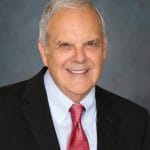
F. Nicholas (Nick) Jacobs, FACHE is a member of the executive committee of the Board of Regents for Southern California University of the Health Sciences. He has served as an officer of the American Board of Integrative Holistic Medicine, was a founding officer of the Academy of Integrative Health and Medicine, and served on the boards of Planetree International and the Integrative Health Policy Consortium.
Mr. Jacobs has consulted for Integrative Medical Centers at the Atlantic Health System, Hackensack University Medical Center, Parkview Health System, Cedars Sinai, the Block Center for Integrative Cancer Care, and Highlands Hospital in Pennsylvania.
He has served as President of Windber Medical Center and in senior leadership roles for Mercy Medical Center and the Conemaugh Health System. He was President and co-founder of the Windber Research Institute, a genetic research institute and bio-repository. He also founded the Clinical and Translational Genome Research Institute, a Pharmacogenomics research institute now affiliated with Southern California University.
Nick is a consultant for the United States Department of Defense Clinical Breast Care Project and was responsible for creating the Conemaugh Health Foundation, Mercy Healthcare Foundation, and the Laurel Highlands Educational Foundation.
He holds Masters Degrees in Education from the Indiana University of Pennsylvania and in Public Management-Health Systems Management from Carnegie Mellon University, has completed a certification in Health Systems Management from Harvard University, and is a fellow of the American College of Healthcare Executives. He has written two books and is a regular contributor to several publications.
Finally, Nick has spoken at conferences for the Highmark, Cigna, the American Hospital Association, American College of Healthcare Executives, National Cancer Institute, Academy of Integrative Health and Medicine, World Health Organization, World Congress on Cardiology, and the Association of Healthcare Philanthropy
A former professional trumpet player and teacher, Nick is the father of two children, has six grandchildren, and lives in Windber and Pittsburgh, PA.


