

Several years ago, I became an apostle of Dan Buettner, the man who made the Blue Zones famous. Buettner traveled to places like Nicoya, Costa Rica; Ikaria, Greece; Loma Linda, California; Okinawa, Japan; and Sardinia, Italy, where many people reportedly lived to be 100 or more.
He studied their eating habits, friendships, family relationships, and daily habits. The Blue Zones became a phenomenon, and I rode that wave. I wrote white papers about it, did a lecture series endorsing it, and believed it was the potential Fountain of Youth that Ponce de Leon had been looking for. People started walking more, eating lentils, drinking red wine, and dancing with the hope that they might live long enough to hang out with their great-grandchildren.
Then my college sophomore granddaughter began lecturing me about the Blue Zones as a fraud and a honey trap for oldsters. Her newly discovered knowledge made me curious. What I discovered was that researchers are now arguing over some of the numbers. Were old birth records accurate? Could an occasional pension check have continued long after the person receiving it?
Those are fair questions. Other researchers do still say the long-lived communities are real. I’ll leave the argument to other folks. That’s not what I want to focus on today. You see, Dan Buettner is also credited with saying the following, To enjoy life, “We need something to do. We need someone to love. We need something to give back to, and something to look forward to.
That sounded incredibly reasonable to me. Even if nobody can prove Buettner’s four things will get me to 100, they describe a life I’d like to live.
Something to do. For years, my calendar was so full I had to write bathroom breaks into my schedule. Now my responsibilities are minuscule, and I’ve learned that an empty calendar isn’t the life I had imagined. So, I write. I make plans. And even when no one is paying me or giving me a name tag, I try to find things that interest me. This part of my life has required the absolute most creativity on my part.
Someone to love. That one sounds easy until you remember that loving people requires time, patience, and listening to stories you’ve heard before. I’m sure they’ve heard a pile of mine, too. Love gives the ordinary parts of a day importance. A phone call from a friend or grandchild can change the whole day.
Something to look forward to. It doesn’t have to be a huge event. It can be a visit, a concert, dinner or lunch with a friend, or a column like this one. Having something to look forward to makes Tuesday feel less like a dress rehearsal for Wednesday.
And then there’s something to give. That has become one of my main focuses. After a long career, it’s easy to think of giving as just another Venmo payment. For me, it’s sharing what I know. Sometimes I do that by making a phone call. I always encourage somebody younger, and I try to show up when I’d rather stay home.
Selfishness makes me the most unhappy. The last thing I want is to be with only myself for company. I’m a lot to put up with.
Bottom line, nothing comes with a guarantee. You can love your family, help your neighbors, eat tofu, and still get sick. Life doesn’t hand out extra years as a reward for good behavior.
Scientists can keep checking on the Blue Zones, but advice doesn’t need a statistic to make it true.
Meanwhile, I have something to write, people to love, grandkids and friends to look forward to seeing, and lots of useful information left to give. I’d call that a good day at any age.
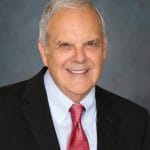
F. Nicholas (Nick) Jacobs, FACHE is a member of the executive committee of the Board of Regents for Southern California University of the Health Sciences. He has served as an officer of the American Board of Integrative Holistic Medicine, was a founding officer of the Academy of Integrative Health and Medicine, and served on the boards of Planetree International and the Integrative Health Policy Consortium.
Mr. Jacobs has consulted for Integrative Medical Centers at the Atlantic Health System, Hackensack University Medical Center, Parkview Health System, Cedars Sinai, the Block Center for Integrative Cancer Care, and Highlands Hospital in Pennsylvania.
He has served as President of Windber Medical Center and in senior leadership roles for Mercy Medical Center and the Conemaugh Health System. He was President and co-founder of the Windber Research Institute, a genetic research institute and bio-repository. He also founded the Clinical and Translational Genome Research Institute, a Pharmacogenomics research institute now affiliated with Southern California University.
Nick is a consultant for the United States Department of Defense Clinical Breast Care Project and was responsible for creating the Conemaugh Health Foundation, Mercy Healthcare Foundation, and the Laurel Highlands Educational Foundation.
He holds Masters Degrees in Education from the Indiana University of Pennsylvania and in Public Management-Health Systems Management from Carnegie Mellon University, has completed a certification in Health Systems Management from Harvard University, and is a fellow of the American College of Healthcare Executives. He has written two books and is a regular contributor to several publications.
Finally, Nick has spoken at conferences for the Highmark, Cigna, the American Hospital Association, American College of Healthcare Executives, National Cancer Institute, Academy of Integrative Health and Medicine, World Health Organization, World Congress on Cardiology, and the Association of Healthcare Philanthropy
A former professional trumpet player and teacher, Nick is the father of two children, has six grandchildren, and lives in Windber and Pittsburgh, PA.


