The Evolution of Mobile Healthcare Services
In our busy lives, staying at our best can be tough. We often need health services that fit our tight schedules. Thankfully, a new solution is here. Mobile healthcare, especially house call hydration, is changing how we approach wellness. This modern way brings medical support and revitalization right to your doorstep.
This guide will explore the exciting rise of on-demand mobile medical and wellness therapy. We will look at how services, such as those providing mobile healthcare house call hydration, focus on patient needs. We’ll also break down the simple steps from booking to treatment.
Join us as we discover how this concierge approach is making healthcare more convenient and accessible for everyone.
The concept of medical care delivered directly to a patient’s home is not new; it harks back to the traditional “doctor’s house call.” However, modern mobile healthcare services have revolutionized this model, integrating advanced medical treatments with unparalleled convenience and technology. Today, this means more than just a doctor visiting for an illness; it encompasses a broad spectrum of wellness and recovery services, prominently featuring house call hydration.

We’ve seen how these services address a critical need for accessibility and comfort. For individuals who are home-bound, have mobility challenges, or simply prefer the privacy of their own space, mobile healthcare eliminates the need for travel, waiting rooms, and exposure to other sick patients. This is particularly valuable in areas like Jackson Hole, where we’ve observed businesses like House Call Hydration proudly serving the community for over seven years. Their dedication as one of the first locally owned and operated IV therapy businesses in Wyoming highlights a growing trend: personalized care plans delivered right to you.
These providers often operate on a 7-day service model, offering flexible scheduling, including evenings and weekends, to fit seamlessly into busy lives. Response times can be impressively quick, with some services boasting arrival within 1-2 hours of booking. This level of responsiveness transforms healthcare from a scheduled inconvenience into an on-demand solution, even offering alternatives to traditional primary care for certain non-emergency conditions.
How Mobile Healthcare Services Address Dehydration and Recovery
One of the core offerings of modern mobile healthcare is intravenous (IV) therapy. This method delivers fluids, electrolytes, vitamins, and minerals directly into the bloodstream, bypassing the digestive system entirely. The key advantage here is 100% bioavailability, meaning the body absorbs all the infused nutrients immediately and efficiently.
For dehydration caused by intense physical activity, illness, or the dry air of high-altitude environments like the Teton Valley, IV therapy offers rapid rehydration. A saline solution, often combined with essential electrolytes, quickly restores fluid balance, alleviating symptoms far faster than oral intake alone. Beyond simple rehydration, these therapies are powerful tools for improving nutrient absorption and managing symptoms. They can deliver targeted vitamins to boost immunity, amino acids for muscle recovery, or anti-nausea medications for hangover relief, providing a comprehensive approach to feeling better, faster.
Understanding the Booking and Administration Process
The process for accessing house call hydration and other mobile IV therapies is designed for maximum ease and efficiency. It typically begins with online scheduling, allowing clients to book appointments from the comfort of their home or office.
Once an appointment is requested, a crucial step involves medical screening. This often includes a brief consultation or a review of a medical questionnaire to ensure the chosen treatment is appropriate and safe for the individual. Many reputable services operate under physician oversight, with medical directors reviewing protocols and guiding treatment plans.
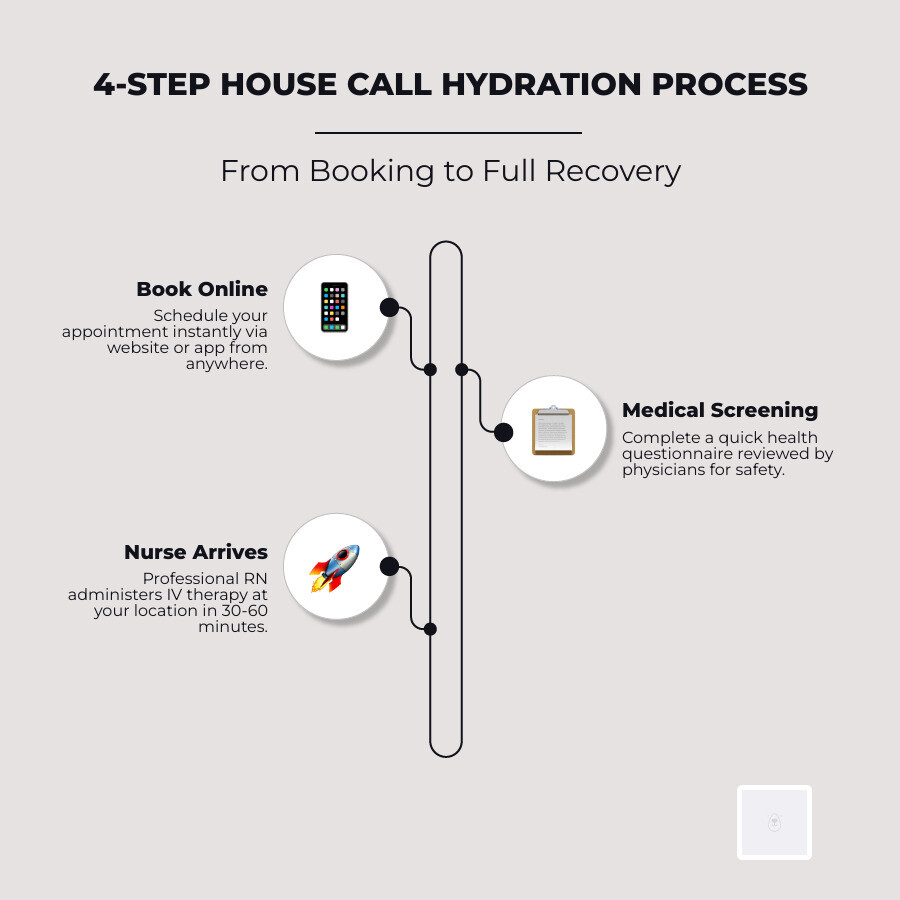
On the day of the appointment, a qualified medical professional, usually a Registered Nurse (RN), arrives at the client’s specified location. After confirming identity and reviewing the treatment plan, the nurse will prepare the IV equipment in accordance with sterile protocols. A small IV catheter is then inserted, typically into an arm vein. The infusion itself usually takes between 30 to 60 minutes, during which the nurse monitors vital signs and ensures the client’s comfort. Post-treatment, the IV is removed, and aftercare instructions are provided. Some advanced services even integrate mobile app features for booking, tracking, and post-treatment follow-up, enhancing the overall concierge experience.
Clinical Applications of At-Home IV Therapy
The versatility of at-home IV therapy extends to a wide range of clinical applications, addressing acute symptoms and supporting general wellness. We’ve seen its particular relevance in specific environments and for various lifestyle needs.
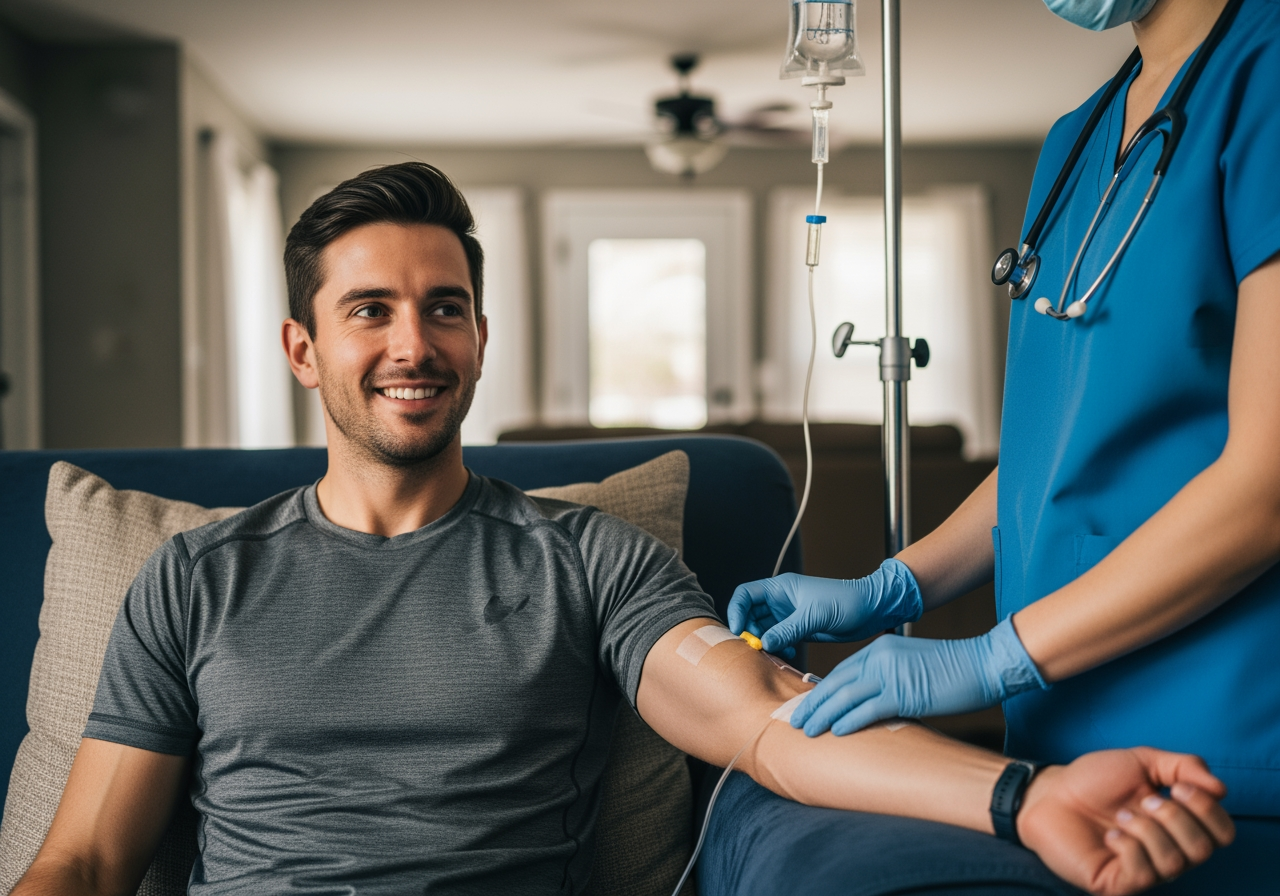
For instance, in high-altitude regions like Jackson Hole and the Teton Valley, altitude sickness is a common concern for both residents and visitors. Mobile IV therapy can provide specialized drips designed to alleviate symptoms such as headaches, nausea, and shortness of breath by delivering oxygen, fluids, and specific vitamins directly. Similarly, for those who’ve enjoyed the local après-ski scene a little too much, hangover relief drips are a popular choice, helping combat dehydration, nausea, and fatigue.
Beyond these specific scenarios, IV therapy is effectively used for:
- Migraine Management: Certain vitamin and mineral combinations can help reduce migraine severity and duration.
- Morning Sickness: Pregnant individuals can find relief from severe nausea and dehydration.
- Flu and Illness Recovery: Boosting the immune system with high doses of Vitamin C, zinc, and other nutrients can speed up recovery from colds, flu, and other viral illnesses.
- GI Relief: For those experiencing stomach bugs or food poisoning, IVs can quickly rehydrate and provide anti-nausea relief.
- Immune System Support: Regular immune boost drips, often containing a hefty dose of Vitamin C and antioxidants, are sought after during cold and flu seasons or for general wellness.
- Athletic Recovery: Athletes use specialized drips with amino acids and electrolytes to reduce muscle soreness and accelerate recovery after intense workouts.
- General Wellness: The Myers’ Cocktail, a classic blend of vitamins and minerals, is a popular choice for overall energy, mood, and immune enhancement.
These diverse applications underscore why mobile IV therapy has become a go-to solution for many seeking rapid relief and enhanced well-being.
The Role of Registered Nurses in Mobile Healthcare Services
The cornerstone of safe and effective mobile IV therapy is the highly qualified Registered Nurse (RN) who administers the treatment. We understand that patient safety is paramount, and we ensure it through stringent professional standards.
All RNs working in mobile IV therapy services must possess state certification and often have years of clinical experience in hospital or emergency settings. This background equips them with expert skills in IV catheter insertion, a critical component of the service. Beyond technical proficiency, their experience allows them to conduct thorough medical history reviews, assess patient suitability for treatment, and identify any potential contraindications.
Emergency preparedness is another vital aspect of their role. While complications are rare, nurses are trained to recognize and manage adverse reactions, ensuring a safe environment for every client. Their professional bedside manner and ability to provide a comfortable, reassuring experience are also key to the positive patient feedback we often see. Furthermore, reputable services ensure all clinical staff are background-checked, adding an extra layer of trust and security for clients receiving care in their homes or private spaces.
Specialized Treatments: NAD+, Oxygen, and Taurine
Beyond basic hydration and vitamin drips, mobile IV therapy offers specialized treatments that target specific physiological functions and wellness goals. We’ve seen a growing interest in these advanced options for their potential to offer significant benefits.
NAD+ (Nicotinamide Adenine Dinucleotide): This coenzyme plays a crucial role in cellular energy production, DNA repair, and overall cellular function. NAD+ IV therapy is gaining popularity for its potential anti-aging effects, ability to improve mental clarity, and support for neurological function. It’s also explored for its role in addiction recovery and chronic fatigue. Due to its higher dosage and specific administration protocols, NAD+ IV sessions typically take longer, often 1-2 hours.
Oxygen Therapy: For conditions exacerbated by altitude or general fatigue, oxygen therapy can be a valuable addition. In areas like Jackson Hole, where thin air can lead to altitude sickness, supplemental oxygen delivered alongside an IV drip can significantly alleviate symptoms such as headaches and shortness of breath. It’s also used for hangover relief and to combat general fatigue, helping to oxygenate tissues and boost energy.
Taurine: This essential amino acid supports energy production, heart health, and mental balance. We’ve observed that individuals experiencing symptoms such as feeling drained, slow recovery after workouts, or issues with heart and brain function may benefit from Taurine IV therapy. Direct intravenous delivery of taurine bypasses potential dietary absorption issues, ensuring rapid and effective replenishment. It’s a targeted amino acid supplementation that supports stamina and sharpens focus. Some providers offer this treatment for approximately $219, highlighting its specific value.
In addition to these, specialized treatments such as peptide therapy and various vitamin boosters are becoming more common, enabling highly customized wellness plans tailored to individual needs.
Comparing Regional and Global Service Providers
The landscape of mobile IV therapy includes both localized, boutique operations and large, globally recognized franchises. Understanding the differences can help clients choose the best fit for their needs.
Feature House Call Hydration (Jackson Hole) Drip Hydration (Global) Service Area Jackson Hole and greater Teton Valley, Wyoming 100+ cities worldwide, including major US metropolitan areas Ownership Model Locally owned and operated Franchise model, global network Years in Service 7 years in Jackson Hole (as of recent data) Established global presence Patient Volume Significant local client base 150,000+ happy patients served Founder Story Founded by a professional snowboarder-turned-nurse (Jackson Hole focus) Not explicitly highlighted in available sources, focus on brand Service Focus Tailored for high-altitude, active lifestyle, local community needs Broad range of IVs for general wellness, recovery, anti-aging Pricing Range Varies by drip (e.g., Taurine at $219) Generally $249 – $999+ depending on treatment and location House Call Hydration, for instance, exemplifies the boutique model. As one of the first locally owned and operated IV therapy businesses in Wyoming, their 7-year history in the Jackson Hole community speaks to deep local roots and a tailored understanding of the unique needs of residents and visitors in a high-altitude, active environment. Their founder, a professional snowboarder who later became a nurse, brings a personal understanding of performance and recovery, which influences their service offerings.
In contrast, companies like Drip Hydration represent a global network. With services in over 100 cities worldwide and having served 150,000+ happy patients, they operate on a larger scale, offering a standardized menu of services across diverse geographic locations. While both models prioritize convenience and professional administration, the locally owned businesses often provide a more personalized touch and a deeper connection to the specific community they serve, whereas larger franchises offer broader availability and brand recognition.
Membership Plans and Corporate Wellness
To foster ongoing wellness and provide greater value, many mobile IV therapy providers offer membership plans and cater to corporate wellness programs. We’ve observed that these options are particularly appealing for those seeking recurring health maintenance or group benefits.
Membership plans typically come in different tiers, such as Basic and Premium, offering a range of benefits. These often include priority booking, ensuring members can secure appointments quickly, and discounted rates on individual IV treatments or additional services. For example, some plans might offer one IV treatment per month at a reduced cost, plus significant discounts on other vitamin IVs or boosters. This model encourages consistent engagement with wellness therapies, making it more affordable for regular users.
Beyond individual plans, corporate wellness programs are a growing segment. Businesses can arrange for mobile IV therapy services to be provided to their employees on-site, promoting health, reducing sick days, and boosting productivity. Similarly, special packages are often available for events like wedding parties, ensuring everyone feels their best for big occasions, or for group hydration events for sports teams or large gatherings. These offerings highlight the adaptability of mobile healthcare to various organizational and social needs, making health maintenance more accessible and integrated into daily life.
Safety, Professional Standards, and Economic Considerations
While the convenience and perceived benefits of house call hydration are appealing, we believe it’s crucial to address the safety, professional standards, and economic considerations of these services.
Any invasive medical procedure carries potential risks, and IV therapy is no exception. Although generally safe when administered by qualified professionals, potential risks include infection at the IV site, bruising, vein irritation, or a more serious condition such as thrombophlebitis, an inflammation of a vein often associated with a blood clot. There’s also a rare risk of fluid overload, especially in individuals with underlying heart or kidney conditions.
This brings us to the discussion of medical necessity. Many medical professionals, such as those whose skeptical views are highlighted by experts like @RobShmerling on platforms like Twitter, question the widespread elective use of IV hydration. They argue that for most healthy individuals, oral rehydration is sufficient and safer. IV therapy is typically medically necessary in hospital settings for severe dehydration, inability to ingest fluids orally, or for delivering medications that cannot be taken otherwise. When considering elective IV services, clients should be aware that these are primarily for symptom relief and wellness enhancement, not for treating severe medical conditions.
Reputable mobile IV services mitigate risks by adhering to strict professional standards. This includes employing only state-licensed Registered Nurses (RNs) or Nurse Practitioners (NPs), operating under physician-guided protocols, and maintaining sterile techniques throughout the entire process. Patient reviews and testimonial data can offer insights into a provider’s safety record and client satisfaction, but they should always be balanced with an understanding of clinical best practices.
Cost Structures and Insurance Reimbursement
The cost of mobile IV therapy is a significant consideration for many. We typically see prices for individual IV drips ranging from approximately $199 to $399, though specialized treatments or those with premium additives can cost upwards of $999. Factors influencing the price include the type of IV solution, specific vitamin or medication additives, travel fees, and the provider’s location.
It’s important for clients to understand that, because these services are often considered elective or wellness-oriented, they are generally not covered by traditional health insurance. Providers usually do not accept insurance directly. However, some companies may provide documentation that clients can submit to their insurance for potential out-of-network reimbursement, though this is not guaranteed. We encourage clients to inquire about HSA/FSA (Health Savings Account/Flexible Spending Account) eligibility, as these funds can often be used for medical expenses, including certain wellness therapies.
When evaluating the cost, it’s helpful to consider the value proposition. While seemingly expensive compared to a bottle of water, proponents argue that the convenience of at-home service, rapid symptom relief, and time saved by avoiding clinic visits can justify the expense. For some, particularly those recovering from hangovers, jet lag, or intense physical exertion, the quick return to normal functioning is highly valuable. However, we always advise a careful comparison to the costs of traditional care (e.g., an urgent care visit for dehydration) and an honest assessment of actual medical necessity.
Frequently Asked Questions about Mobile Hydration
As mobile IV therapy becomes more prevalent, we encounter several common questions from potential clients. Here, we address some of the most pressing concerns.
Is mobile IV therapy medically necessary for hangovers?
Generally, no, mobile IV therapy is not considered medically necessary for hangovers. While it can provide rapid symptom relief by rehydrating the body and delivering anti-nausea or pain-relief medications, most hangovers can be effectively managed with oral rehydration (drinking water, electrolyte drinks) and over-the-counter medications. The skeptical view, often voiced by medical professionals, highlights that hangovers are not solely caused by dehydration, and therefore, an IV may not address all underlying issues. However, for those seeking a quick recovery to resume daily activities, the speed of IV delivery can be appealing, albeit elective.
What are the primary risks of elective IV services?
We must emphasize that while mobile IV therapy is generally safe when performed by qualified professionals, it is an invasive procedure and carries inherent risks. The primary risks of elective IV services include:
- Infection: Any time the skin barrier is broken, there’s a risk of bacteria entering the bloodstream. Reputable providers use strict sterile techniques to minimize this.
- Bruising and Vein Irritation: It’s common to experience minor bruising or tenderness at the injection site. Repeated IVs can also lead to vein irritation or scarring.
- Thrombophlebitis: As mentioned earlier, this is inflammation of a vein, often accompanied by a small clot, which can cause pain and redness.
- Fluid Overload: While rare in healthy individuals, administering too much fluid too quickly can be dangerous, especially for those with pre-existing heart, kidney, or liver conditions. This underscores the importance of a thorough medical screening.
- Allergic Reactions: Though uncommon, reactions to components of the IV solution (vitamins, medications) can occur.
To minimize these risks, we recommend choosing providers who prioritize safety, conduct comprehensive medical screenings, and employ highly trained and licensed medical personnel.
How do I know if a mobile provider is qualified?
Ensuring your mobile IV provider is qualified is paramount for your safety and the effectiveness of the treatment. We advise clients to look for several key indicators:
- Registered Nurse (RN) Status: All individuals administering IV therapy should be licensed Registered Nurses. They have the necessary training and legal authority to perform venipuncture and administer IV fluids.
- Nurse Practitioner (NP) or Medical Director Oversight: Reputable mobile IV services operate under the direct supervision of a licensed physician or Nurse Practitioner. This ensures that medical protocols are sound and that a medical professional is available for consultation if needed.
- State Licensing: Verify that the company and its medical staff are properly licensed in your state.
- Years of Experience: Inquire about the nurses’ clinical experience. Those with backgrounds in emergency medicine, critical care, or hospital settings often bring greater expertise.
- Safety Records and Protocols: Ask about their safety protocols, including medical screening processes, sterile technique, and emergency procedures. Background checks for all clinical staff are also a strong indicator of a professional operation.
By asking these questions, you can make an informed decision and ensure you receive care from a competent and trustworthy provider.
Conclusion
The rise of on-demand mobile medical and wellness therapy, particularly house call hydration, marks a significant evolution in healthcare delivery. We’ve seen how this concierge approach prioritizes patient convenience, bringing essential services directly to homes, offices, and even event venues. From rapid rehydration for athletes and travelers to specialized treatments such as NAD+ and oxygen therapy, these services empower individuals to take a more proactive role in their wellness journey.
However, we also recognize the importance of balancing this newfound convenience with rigorous safety standards and a clear understanding of medical necessity. While mobile IV therapy offers compelling benefits for symptom relief and wellness enhancement, it remains an invasive procedure that requires professional administration by licensed and experienced medical personnel.
As technology continues to integrate with healthcare, we anticipate further innovations in this sector, making wellness-on-demand even more accessible and personalized. The growing market for mobile medical solutions reflects a broader societal shift towards patient empowerment and a desire for healthcare that fits seamlessly into modern life. By staying informed and choosing reputable providers, we can all responsibly embrace the future of mobile medical and wellness therapy.